Financial planning must be underpinned by two things: Robust investment performance & Human expertise

This article was first published online in thewealthnet on 14 April. It summarised an interview with Netwealth CEO and Founder Charlotte Ransom which took place after the PAM award results announcement where Netwealth won the Investment Performance Cautious Portfolios Category and was shortlisted in High Growth, Growth and Defensive Categories.
Key Takeaways
- Technology is used to support people, not replace them
- Human expertise remains central to Netwealth’s approach
- Digital tools help clients feel closer to their money
- A disciplined, long‑term investment approach has been independently recognised
- The focus is on clarity, lower costs and empowering better decisions
PAM Award winner on balancing human touch with a digital approach
Technology has transformed the way wealth is managed, but it comes with a new set of challenges. For Netwealth, a wealth and investment management firm, digital tools must be underpinned by two things: robust investment performance and human expertise.
Chief executive Charlotte Ransom reflected that Netwealth has always sought to keep the “best bits of traditional wealth management”. Chief among those, she noted, are the people.
Rather than ceding investment decisions to algorithms, Netwealth prioritises human oversight and personal interactions with clients. In this respect, technology provides the framework in which wealth managers operate; it is an enabler, not a replacement.
This digital approach benefits both the firm and its clients. Ms Ransom recognised that, by getting technology to do much of the “heavy lifting”, Netwealth can streamline processes, reduce operational costs, and focus staff time where it matters most – supporting and advising clients.
Ms Ransom explained that technology has helped the firm reduce operational costs by roughly one percent, while the service itself remains largely unchanged – at least from a human perspective.
“From a technological standpoint, the service is dramatically improved,” she said.
At the same time, Netwealth’s digital interface aims to help clients visualise their wealth by giving them a clearer, more immediate view of their finances.
“I use the phrasing ‘helping people get closer to their money’,” Ms Ransom said.
“The digital piece helps clients to visualise their pensions, their ISAs, their taxable accounts, which in the past they have felt further and further removed from.”
That accessibility is not purely cosmetic. Ms Ransom observed that the ease of a digital interface can be particularly valuable for female clients, helping to demystify personal finance – “not everyone’s favourite topic,” she acknowledged – and empowering those who may have previously felt excluded from the conversation. By simplifying the experience, for instance through dashboards and visualisation, it can lower barriers to engagement and help make complex ideas easier to grasp.
This proposition has been in place since Netwealth’s inception in 2015. Over a decade later, it continues to serve the firm well, with Netwealth winning the 2026 PAM Award for Investment Performance – Cautious Portfolios, following nominations in all four Investment Performance categories.
This win built on Netwealth’s earlier success: the firm won the Emerging Manager (now known as the ‘Challenger’) Award in 2019.
In the years between, the market has faced a series of headwinds, including the global pandemic, the Russian invasion of Ukraine, US President Donald Trump’s tariff policies and, more recently, the Iranian conflict.
These developments have helped to inform – and, in some respects, validate – Netwealth’s approach; Ms Ransom is pleased to see the portfolios have “really withstood the momentary tests along the way”.
“Our intention has always been to avoid messing with the portfolios too much,” she explained. Doing so risks introducing friction costs and begins to imply market timing, which Netwealth does not do.
Instead, Ms Ransom believes in ‘time in the market’ and the value of active asset allocation, followed by passive implementation.
Using a goals‑based investing approach, portfolios are structured to capture upside while remaining resilient during downturns, with broad global diversification helping to spread risk.
“It is all about being able to take advantage of the upswing, while ensuring you can live through the volatility of the downswing,” she said.
Against this backdrop, Netwealth has reported portfolio outperformance of one to two percent per annum – a margin that, when combined with lower fees, helps ensure clients retain more of their returns.
“After all, it is the net‑of‑fee returns that end up in people’s pockets,” Ms Ransom stressed.
From this perspective, the advice for clients is simple: focus on what you can control, such as the cost of your wealth management, while recognising factors you cannot, like market volatility.
Taking inflation as an example, Ms Ransom highlighted common concerns including rising prices, slow economic growth, pressure on cashflows and the cost of living. By keeping wealth management costs lower, clients have more resources available to navigate these external pressures.
“Your choice of wealth manager should put your mind at rest, especially during uncontrollable, nationwide events,” she said.
Looking forward, Ms Ransom intends to take Netwealth into its next phase of growth.
Having taken nine years to reach £1 billion in assets under management, the firm is now approaching £1.5 billion. Ms Ransom attributed part of this momentum to rising interest in its financial advice arm, which has attracted a broader clientele since the 2025 Autumn Budget.
The firm also hopes to raise the profile of its referral incentive, the Netwealth Network.
This scheme links fees to the size of a member’s network, with costs falling as more connections are added. Investments between £50,000 and £249,999 are charged an annual fee of 0.75%, but this falls to 0.60% once collective assets exceed £250,000, 0.45% above £1 million, and 0.35% once they reach £5 million.
Combined with the firm’s plans to expand its financial advice proposition, the incentive supports Netwealth’s broader aim: to make personal finance empowering, not overwhelming.
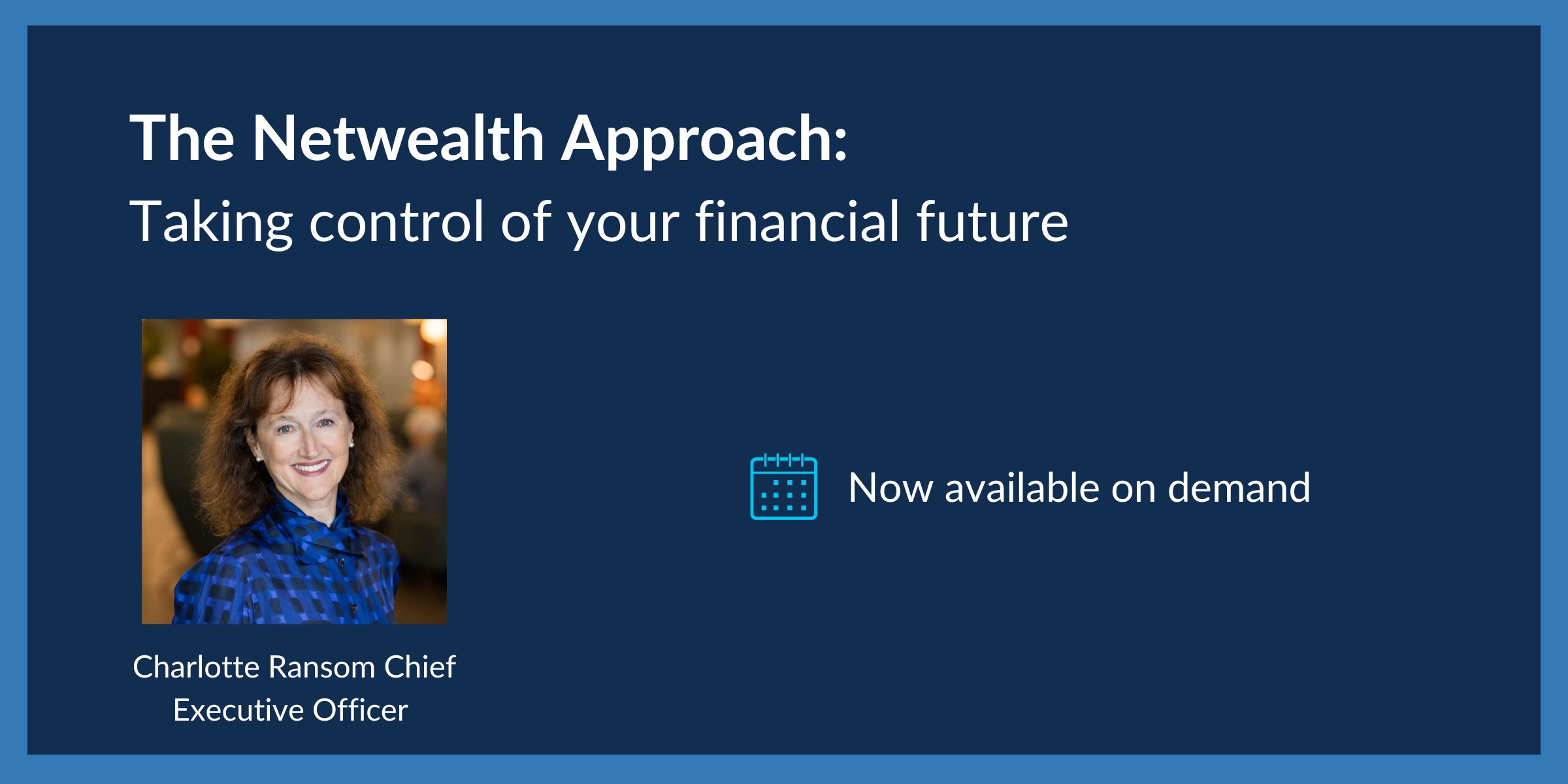
Want to hear more about The Netwealth Approach?
Click on the below to watch one of our latest webinars where Charlotte explains how we can help you take control of your financial future.
This article is published for informational purposes only and does not constitute personal financial advice.