Staying Invested Through Uncertainty: Why Not Acting Is Often the Smartest Action

Periods of geopolitical tension and market volatility, such as today’s conflict in the Middle East, can make even experienced investors feel uneasy. The constant news flow, the human tragedy, and the sense of global instability all increase the emotional weight of investing decisions. When events are highly visible, we naturally give them more importance. This makes us more likely to feel that we must do something.
Long-term investing success is rarely about rapid reactions. More often, it is about resisting the urge to act on short-term noise and recognising that periods of discomfort are not only normal but expected. In many cases, active inaction can be the most intelligent choice
The Emotional Pull of Market Noise
Human psychology plays a powerful role in investment decisions. When markets fall or news headlines turn alarming, our instinct is to reduce discomfort by taking action, typically by selling riskier assets or moving to cash. Behavioural finance gives us several explanations:
• Loss aversion: Losses hurt more than gains feel good.
• Availability bias: The easier a scenario is to imagine and the more frequently information is encountered, the more we feel it matters.
• Action bias: We prefer doing something over doing nothing, even when doing nothing is the optimal strategy.
Highly visible news such as geopolitical conflict or political instability often exaggerates these instincts. During such periods, investors often forget a fundamental truth: markets have experienced shocks, crises, and uncertainty many times before, and such events are far from unprecedented.
What you might feel like doing:“I need to cut risk until this blows over. These events feel too big to ignore.”
Acknowledge the emotional response but remember that market volatility is not unusual. Short-term swings often fall within what markets have historically considered normal and tend to recover over time.
Putting Volatility Into Context
When markets move sharply, it is easy to forget that volatility is the price for long-term returns. What feels like extraordinary movement is often just part of the normal range of outcomes for your risk level.
Short-term periods can show unusually strong or weak returns simply because markets tend to overshoot in both directions before settling. Historically, a wide range of outcomes has been completely normal for a given risk profile.
For example, a higher-risk portfolio invested largely in equities might reasonably expect an average 12-month return of around 6 to 7 percent, but the normal range of outcomes over that same period may be as high as 15 percent or as low as negative 10 percent. Viewed over five years, the range of possible outcomes is still wide, although the probability of losing money falls significantly.
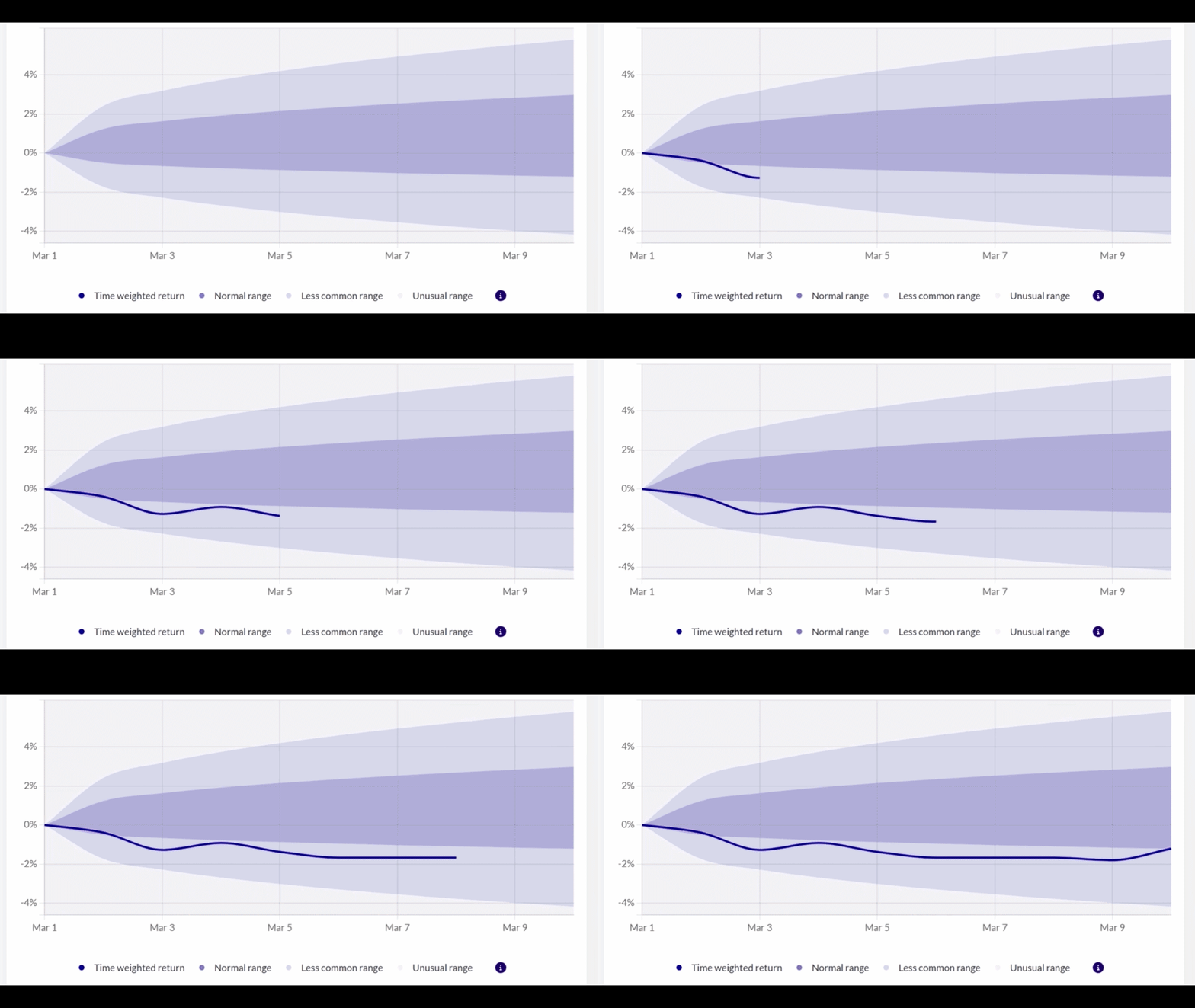
We also need to acknowledge what has happened recently and, when assessing short-term movements, look back over a longer period. The charts below show a higher-risk portfolio (Our Risk Level 6 -75% Equity) over the two weeks from the beginning of March 2026, where returns appear unusually negative.
We then look at the five-year period from March 2021, where returns are actually slightly above the normal positive range.
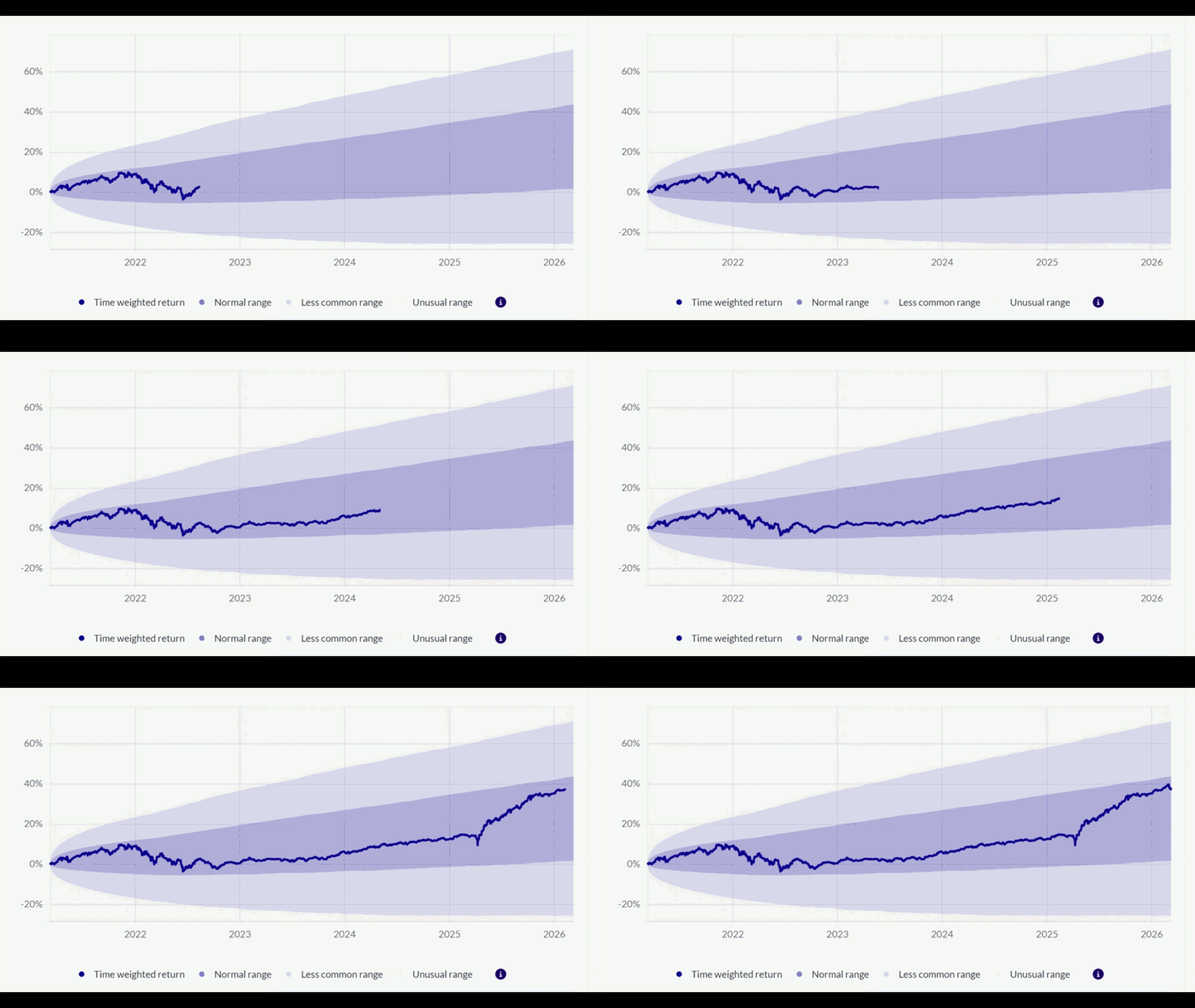
It is important to remember that markets tend to overshoot both on the upside and the downside. Over time, they tend to stay within a normal range, so we should not panic if short-term returns look unusually poor, nor should we assume exceptionally strong periods will continue indefinitely.
The High Cost of Becoming an Uncomfortable Seller
One of the most damaging investor behaviours is selling during market stress. This is what turns a short-term loss into a permanent loss of capital. A good financial plan can ensure you are not a forced seller, but it is up to you to ensure you are not an uncomfortable seller.
Key long-term lessons include:
• Markets often begin recovering before news improves.
• The worst days and the best days frequently occur close together.
• Missing just a handful of the strongest days dramatically reduces long-term returns.
When you sell in fear and sit in cash until things feel safe, you rely on timing your re-entry. Yet markets typically rebound when sentiment is still negative. Investors waiting for reassurance usually re-enter too late, turning temporary declines into permanent losses.
Why Not Acting Is an Active Choice
It may feel counterintuitive, but choosing not to act during periods of stress is often a deliberate, disciplined decision. If your portfolio has been carefully constructed around your goals, risk level, and time horizon, short-term volatility should already be built into your plan.
Doing nothing means:
• Staying aligned with your long-term objectives
• Avoiding the risk of crystallising losses
• Allowing compounding to work uninterrupted
• Preventing emotional decisions from derailing your strategy
This is not being passive; it is discipline. Markets have experienced countless shocks, and most felt different at the time. Yet markets have shown remarkable resilience across decades.
When Should You Sell?
There are legitimate reasons to sell investments. These relate to your personal circumstances, not short-term market conditions.
You should consider selling only if:
-
Your plans or life needs have changed.
For example, you need cash for a major expense, or your financial goals have shifted. -
Your time horizon has shortened.
If you need money within the next few years, reducing risk may be prudent. Perhaps when you started investing you did not need the money for several years, and now the moment of drawing down is near. That may be the time to readjust. -
You are rebalancing.
This is the disciplined version of selling: adjusting the portfolio when something has performed well to keep it aligned with your future goals.
What you might feel like doing:
“I’m worried; I should sell before things get worse.”What you should do:
Ask yourself the critical question: Has my plan changed, or just my emotions? If only your emotions have changed, your portfolio probably should not.
Periods like today’s geopolitical tensions are uncomfortable. Markets may feel unpredictable or fragile. But discomfort is not a reason to act. In investing, the best decisions can often the ones you do not make.
Staying invested, keeping perspective, and trusting your long-term plan have historically been essential for achieving successful outcomes.
This is the opinion of Matt Conradi as of 16th March 2026 and if you are unsure as to whether disinvesting or investing is suitable for you, please seek advice.