The Bank should be forward looking and cut rates
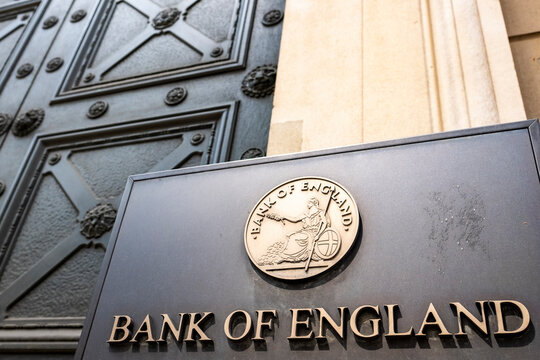
The following column by Gerard Lyons appeared in The Daily Telegraph on Monday 15th December 2025. It discusses the Bank of England's expected interest rate cut from 4% to 3.75% this week.
A cut in UK interest rates is likely this week. On Thursday, the Bank of England’s nine-person Monetary Policy Committee (MPC) meets and the Bank Rate should fall from 4 per cent to 3.75 per cent.
At the last meeting, the MPC voted 5-4 to leave rates unchanged at 4 per cent. That was an unsurprising outcome ahead of the Budget. With Budget uncertainty now passed, there is no reason for the Committee to wait. The case for an interest rate cut is strong: the economy is softening, while inflation looks set to decelerate.
The UK’s rate decision comes close on the heels of the US Federal Reserve, which cut interest rates by 0.25 percentage points last week and signalled a bias to ease further. Expectations of more US cuts have been reinforced by the prospect of a new Fed Chair next year.
Lower US rates may support sentiment in Britain, but they are not without risk. As financial markets are already showing, liquidity is ample and this should add to the case for caution about cutting US rates too far, or too fast.
Against this global backdrop, it will be domestic factors that drive the Bank of England’s approach, with gradual cuts the most likely option.
While decisions on interest rates are influenced by the latest data, that should not be the main driver. Policy has become too reactive and is not forward-looking enough. Monetary policy acts with a long and variable lag. Changes in rates typically take time to feed through fully, perhaps over twelve months. That risks monetary policy being too slow to act.
There is another challenge. Views on the MPC look increasingly entrenched. For the first time, the minutes of their last meeting included a paragraph summarising each member’s position. Transparency is welcome, but it must not harden views or lock members into existing positions. Voting records and speeches already reveal leanings; what matters is that members arrive open-minded and are willing to shift as the evidence changes.
This week’s mood may be shaped by Wednesday’s inflation data for November. Markets expect headline inflation to edge down from 3.6 per cent to 3.5 per cent, with core inflation unchanged at 3.4 per cent.
Inflation has been sticky and is above the 2 per cent target, driven by services inflation and wage pressures. Services inflation has eased, but at 4.5 per cent remains elevated, compared with 2.6 per cent for goods prices.
Markets expect inflation to ease and then to fall sharply from next April, as changes to household energy-bills, alongside freezes in fuel duty and rail fares, knock around 0.4 percentage points off the annual rate. Forecasts for 2026 centre on inflation around 2.5 per cent.
However, inflation could turn out even lower, because of global competition. The full extent of this has not been discounted. Since summer 2024 China has experienced involution. This reflects intense widespread competition, as seen in electric vehicles and solar panels. Inflation in China is close to zero. China helped keep global inflation low earlier this century. A new wave of competitively priced, high-quality exports into Britain and Western Europe could again dampen inflation pressures next year.
This inflation outlook justifies rate cuts. The UK growth outlook should not prevent them. The economy was weak in the months preceding the Budget. Uncertainty dented confidence and weighed on housing.
Modest growth lies ahead. The Office for Budget Responsibility’s forecast of 1.5 per cent growth in 2026 is plausible but risks to jobs are rising. The legacy of last year’s national insurance rise, higher wage costs and the new Employment Bill all add to business costs including for small and medium-sized enterprises (SMEs), who face a challenging time.
Bank of England data shows that in October the annual increase in borrowing by SMEs was only 1.6 per cent, compared with 6.9 per cent for large companies, while the effective interest rate on new SME loans rose to 6.26 per cent from 6.18 per cent in September. Monetary conditions are restrictive.
Still, there are enough supports to keep the economy ticking over. The savings rate is high and corporate balance sheets appear sound, which should sustain spending.
Where interest rates will settle is unclear. It’s important to avoid a damaging return to cheap money, which would feed future inflation and a misallocation of capital. While rates can fall they still need to settle at a far higher level than pre-pandemic.
Markets see the Bank Rate falling to 3.5 per cent by late spring. That would constitute neutral in my view, being consistent with inflation of 2 per cent and growth around 1.5 per cent.
However, next year, if growth weakens further and inflation subsides, then Bank Rate may need to fall below neutral, into accommodative territory and towards 3 per cent.
This article is for information purposes only and does not constitute financial advice.